


 Deutsch
 English
 Español
 Français
 Nederlands
 Português


 Share
Share




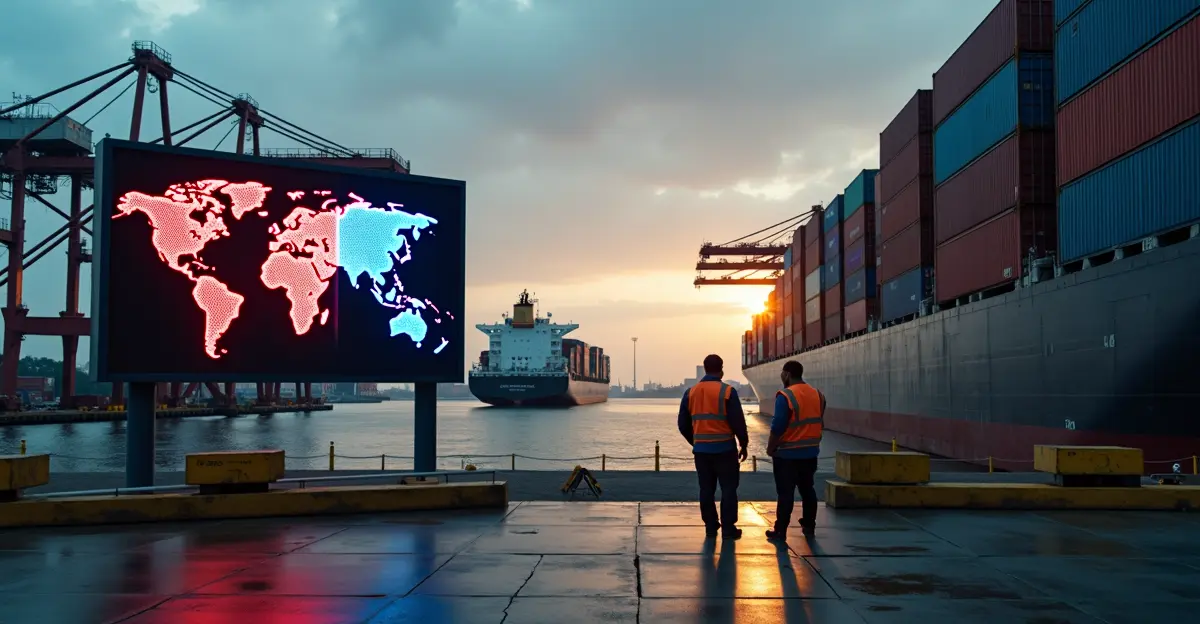
The first half of 2026 marks a critical inflection point for global trade. With US tariff rates at their highest since World War II, stockpiled inventories are being depleted, and the full pass-through costs of tariffs are hitting prices and corporate margins. The result is a structural reconfiguration of global supply chains—a 'Great Reallocation'—that is redrawing the map of international commerce. Since the Trump administration's 'Liberation Day' tariffs in April 2025 and follow-on Section 122 tariffs in 2026, US imports from China have plummeted to near-2001 levels, while Mexico, Vietnam, and India have emerged as major alternative sourcing destinations. More than $165 billion in trade has been diverted from the US-China corridor, and 65% of companies have permanently changed sourcing patterns, according to industry surveys.
The Tariff Shock and Its Immediate Aftermath
The Trump administration's tariff offensive began in earnest in April 2025 with the so-called 'Liberation Day' tariffs, imposed under the International Emergency Economic Powers Act (IEEPA). These tariffs applied a minimum 10% levy on goods from nearly all countries, with punitive rates as high as 50% on certain products like steel, aluminum, and automobiles. The overall average effective US tariff rate surged from 2.5% to an estimated 27%—the highest level in over a century. In February 2026, the Supreme Court ruled the IEEPA tariffs unconstitutional in Learning Resources, Inc. v. Trump, ordering refunds of the $166 billion collected from more than 330,000 businesses. However, the administration swiftly pivoted, imposing a global 10% tariff under Section 122 of the Trade Act of 1974, effective for 150 days until July 24, 2026, with threats to raise the rate to 15%. This legal whiplash created immense uncertainty, but the direction of travel was clear: the era of low-cost, frictionless global trade was over.
Redrawing the Trade Map: Winners and Losers
China: The Biggest Loser
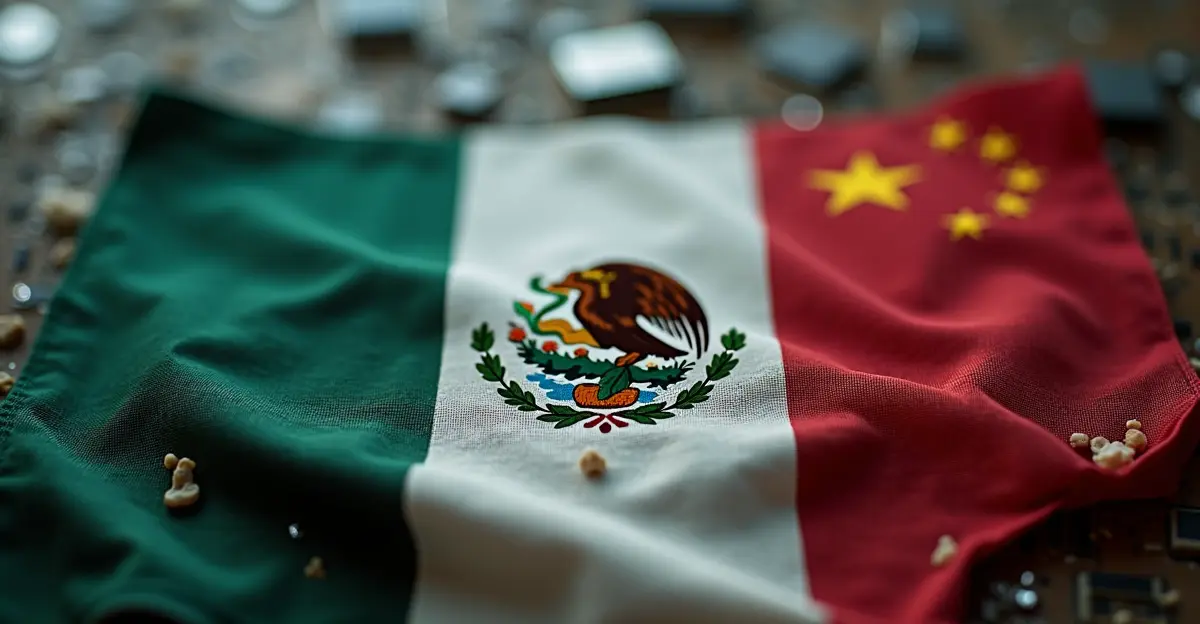
US imports from China have fallen to levels not seen since 2001, when China first joined the World Trade Organization. The US-China trade war escalation has accelerated a decoupling that began during the first Trump administration and continued under President Biden. Chinese exports to the US have been replaced by goods from Mexico, Vietnam, India, and other Southeast Asian nations. The shift is most pronounced in electronics, machinery, and consumer goods, where tariff rates of 25-50% have made Chinese sourcing uncompetitive.
Mexico: The Nearshoring Champion
Mexico has emerged as the biggest beneficiary of the Great Reallocation, capturing a significant share of the trade diverted from China. The Mexico nearshoring boom 2026 has been fueled by the US-Mexico-Canada Agreement (USMCA), geographic proximity, and competitive labor costs. Mexican exports to the US have surged in automotive parts, electrical equipment, and medical devices. However, capacity constraints and infrastructure bottlenecks are beginning to emerge, limiting further gains.
Vietnam and India: The Friend-Shoring Alternatives
Vietnam has become a key hub for electronics and textiles, while India is attracting investment in pharmaceuticals, IT services, and advanced manufacturing. Both countries benefit from 'friend-shoring'—the strategy of sourcing from allied nations with lower geopolitical risk. The Vietnam manufacturing hub growth has been particularly rapid, with US imports from Vietnam rising by over 30% year-on-year. India, meanwhile, is positioning itself as a long-term alternative to China, leveraging its large domestic market and skilled workforce.
Industry-Level Impacts: Which Sectors Are Reshaping?
The reallocation is not uniform across industries. Electronics and electrical equipment have seen the most dramatic shifts, as these products were heavily targeted by tariffs and have complex, modular supply chains that can be reconfigured relatively quickly. Automotive supply chains, by contrast, are slower to change due to the high capital intensity and strict regulatory requirements. However, the automotive supply chain shift Mexico is accelerating, with major automakers announcing new investments in Mexican plants. In pharmaceuticals, the US is seeking to reduce reliance on Chinese active pharmaceutical ingredients (APIs), with India emerging as a key alternative. The steel and aluminum industries have seen less reallocation due to existing tariff protections, but downstream users are feeling the pinch of higher input costs.
The Cost of Reconfiguration: Higher Prices and Corporate Strain
The Great Reallocation is not cost-free. Companies are facing higher logistics costs, the expense of building new supplier relationships, and the need to invest in new production facilities. These costs are being passed through to consumers in the form of higher prices. US consumer goods prices have risen by an estimated 3-5% as a direct result of tariffs, according to economists. Corporate bankruptcies have increased to the highest level since 2010, particularly among small and medium-sized enterprises that lack the resources to navigate the new trade landscape. The tariff impact on corporate margins 2026 is being felt across retail, manufacturing, and construction.
Expert Perspectives
'This is the most significant reconfiguration of global supply chains since the rise of China in the 1990s,' says Dr. Elena Marchetti, a trade economist at the Peterson Institute for International Economics. 'The difference is that this time, the driver is policy, not market forces. The question is whether the new geometry is more resilient or simply more fragmented.' Industry executives echo the sentiment. 'We have permanently changed our sourcing strategy,' says a procurement director at a major US electronics firm. 'Even if tariffs were removed tomorrow, we would not go back to China. The risk is too high.'
Frequently Asked Questions
What are the Liberation Day tariffs?
The Liberation Day tariffs, imposed in April 2025 under the International Emergency Economic Powers Act (IEEPA), applied a minimum 10% tariff on goods from nearly all countries, with higher rates on specific products. They were ruled unconstitutional by the Supreme Court in February 2026.
What is Section 122 of the Trade Act of 1974?
Section 122 allows the president to impose temporary tariffs of up to 15% for 150 days to address balance-of-payments deficits. The Trump administration used this authority to impose a global 10% tariff after the Supreme Court struck down the IEEPA tariffs.
Which countries are benefiting most from supply chain reallocation?
Mexico, Vietnam, and India are the primary beneficiaries, capturing trade diverted from China. Mexico leads in nearshoring, while Vietnam and India are key friend-shoring destinations.
How much trade has been diverted from the US-China corridor?
More than $165 billion in trade has been diverted from the US-China corridor since the tariffs were imposed, according to trade data analysis.
Will supply chains ever return to China?
Most analysts believe the reallocation is permanent. Surveys indicate that 65% of companies have permanently changed sourcing patterns, citing geopolitical risk and tariff uncertainty.
Conclusion: A New Trade Geometry
The Great Reallocation is reshaping the global economy in ways that will persist long after the current tariff regime ends. The new trade geometry is more fragmented, with multiple regional hubs replacing the single China-centric model. While this may enhance resilience, it also introduces new inefficiencies and costs. For businesses and policymakers, the challenge now is to navigate this complex landscape and build supply chains that are both competitive and secure. The first half of 2026 is the moment of truth—the point at which the theoretical reallocation becomes a concrete reality.
Sources
- Wikipedia: Tariffs in the second Trump administration
- Peterson Institute for International Economics
- US Customs and Border Protection data
- Industry surveys and corporate earnings reports


Follow Discussion